Glutathione
Glutathione is your body’s master antioxidant and detoxification molecule—a powerful tripeptide that binds to toxins, heavy metals, and free radicals to render them harmless and eliminate them through the liver and kidneys. It’s the body’s primary defense against oxidative stress, the process where free radicals damage cells and accelerate aging, disease, and inflammation.
Route
Subcutaneous injection
Dose range
150 mg – 600 mg
Frequency
Once per day (subcutaneous) or every other day for maintenance
Cycle length
4–8 weeks
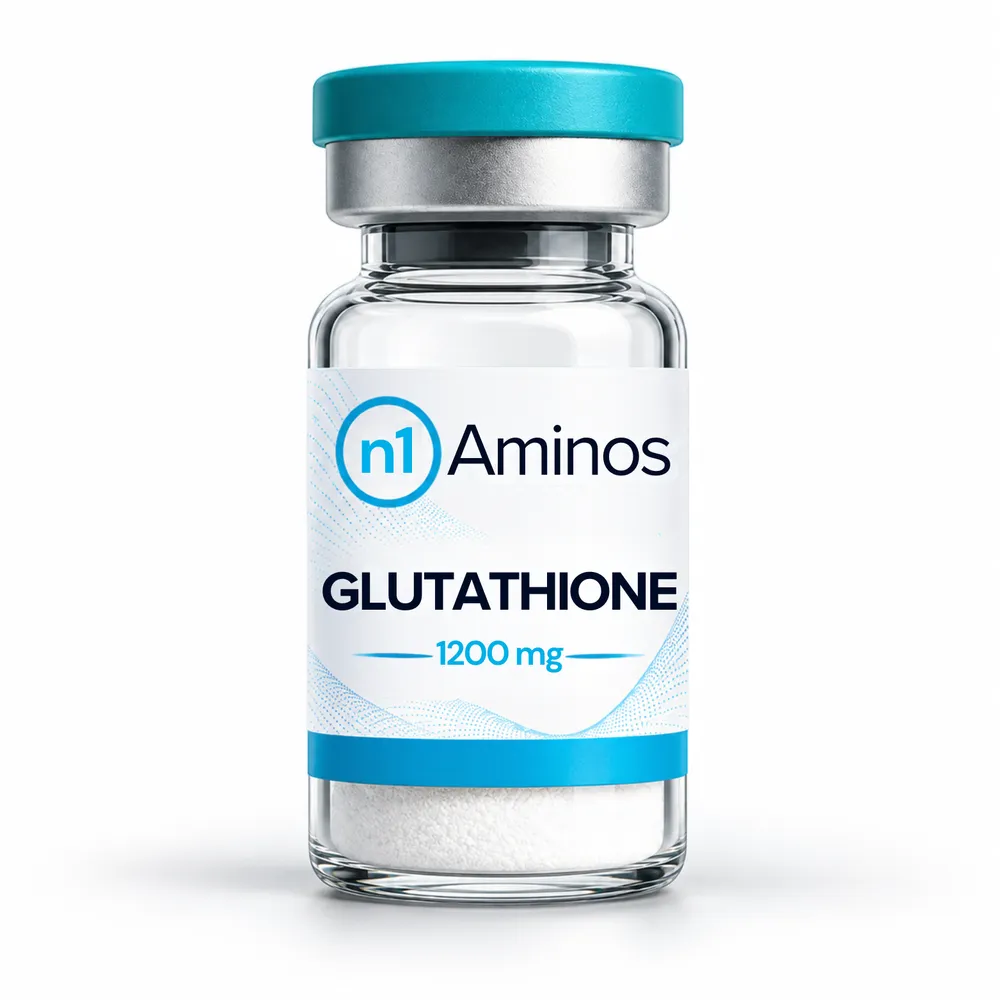
Glutathione 1200MG
Third-party tested, lot traceable, ships in 3–5 business days.
Overview
Glutathione is your body’s master antioxidant and detoxification molecule—a powerful tripeptide that binds to toxins, heavy metals, and free radicals to render them harmless and eliminate them through the liver and kidneys. It’s the body’s primary defense against oxidative stress, the process where free radicals damage cells and accelerate aging, disease, and inflammation. Naturally produced in your cells, glutathione declines with age, stress, and environmental toxin exposure, explaining why older bodies struggle with recovery, accumulate damage, and succumb to disease faster. Supplementation boosts glutathione levels to restore youthful cellular defense and detoxification capacity.
Clinical benefits are expansive: enhanced immune function and antibody production for better infections resistance, liver detoxification and hepatic protection (critical if you’ve had alcohol, medications, or environmental exposure), improved skin clarity and reduced pigmentation from oxidative stress, and metabolic support for energy production and athletic performance. It protects your heart from oxidative damage, supports brain health against neurodegeneration, and improves insulin sensitivity for metabolic health. Research suggests protective effects against Parkinson’s, Alzheimer’s, autism, and chronic fatigue by reducing cellular inflammation and oxidative burden. Combined with vitamin C and selenium for optimal function, glutathione is an essential anti-aging and protective tool for anyone serious about longevity and disease prevention.
Studied benefits
- A powerful antioxidant that maintains cellular redox balance and supports liver detoxification
- It modulates the immune system and has been studied for its ability to improve skin brightness and reduce the melanin index
Reported side effects
- Well-tolerated
- rare reports of gastrointestinal discomfort at high doses
- Common side effects are limited to mild localized injection reactions
Protocol
Dosing Schedule (Subcutaneous)
Educational reference only. Not medical advice. Research compounds are not approved for human use. Full disclaimer.
Glutathione (600mg)
Reconstitute with 2.0 mL bacteriostatic water (Final concentration: 300 mg/mL).
Support antioxidant defense, cellular detoxification, and immune function.
| Week | Daily Dose (mg) | Draw at 300 mg/mL | Log |
|---|---|---|---|
| Weeks 1–2 | 150 mg | 50 units (0.5 mL) | + Log |
| Weeks 3–4 | 300 mg | 100 units (1 mL) | + Log |
| Weeks 5–8 | 600 mg | 200 units (2 mL) | + Log |
Frequency
Once per day (subcutaneous) or every other day for maintenance.
Timing
Any consistent time; rotate injection sites.
Cycle length
4–8 weeks.
Unit calculator
Set your vial and water; the table above updates.
300 mg/mL
4 doses of 150 mg per vial
At the starting dose (150 mg × 3.5/week for a 4-week cycle) you would use about 2100 mg, i.e. 4 × 600 mg vials. Higher phases use proportionally more.
Assumes a U-100 insulin syringe (100 units = 1 mL). Educational math only; verify every calculation yourself.
Context
Lifestyle considerations
Prioritize a diet rich in sulfur-containing foods, such as cruciferous vegetables, garlic, and onions, to provide the precursors necessary for endogenous glutathione synthesis and recycling. Avoid alcohol, smoking, and environmental toxins to minimize the oxidative load on the liver and maximize the peptide’s detoxifying potential. Ensure 7–9 hours of quality sleep to support the body’s natural antioxidant defense systems and cellular repair. Consider complementary nutrients like Vitamin C, Selenium, and Alpha Lipoic Acid, as these are research-backed to work synergistically with glutathione to maintain a healthy redox state.
Evidence
Research summaries
Therapeutic potential of glutathione
Findings: Acts as a powerful shield against cell damage from toxins and stress, helping with diseases like diabetes and infections.
Glutathione is like the body's master cleaner, grabbing harmful oxygen bits that hurt cells. This study explains how low levels lead to problems like poisoning, diabetes, kidney issues, lung swelling, heart disease, cancer, and weak immunity. Boosting it with supplements or meds can fix the balance of good to bad forms, making cells tougher. For example, in sick people, it cuts inflammation and helps healing without big side effects. Think of it as a superhero inside every cell, mopping up mess to keep you healthy and full of energy. Doctors see it as a helper drug for tough illnesses where normal treatments fall short. It recycles other fighters like vitamin C and E, keeping your defenses strong during colds or workouts so you bounce back faster without feeling wiped out.
Read the study ↗An Update on Glutathione's Biosynthesis, Metabolism, Functions, and Medicinal Purposes
Findings: Fights aging, boosts detox, and supports liver health by neutralizing poisons.
Our bodies make glutathione from three building blocks to handle redox jobs—balancing chemicals that power life. It teams up in reactions to zap free radicals, recycle other antioxidants like vitamins C and E, and clean blood of junk. Low levels speed up aging and sickness, but eating right or taking it raises stores for better skin glow, stronger immunity, and fewer wrinkles. In treatments, it's used for liver detox after booze or meds overload, Parkinson's shakes from brain oxidation, and even breathing help in tough lung cases. Like a daily tune-up for your inner factory, keeping everything running smooth so you feel young and bouncy. Kids can think of it as the battery charger for your body's power plants.
Read the study ↗Glutathione in health and disease: pharmacotherapeutic issues
Findings: Improves lung function in smokers, cuts heart risks, and aids cancer recovery.
This review covers glutathione's basics: a tiny chain that's key for breathing easy, fighting germs, and staying young. In lung diseases like asthma or smoky coughs, inhaling or eating it eases shortness of breath by calming fire-like inflammation. Heart patients get less artery clog with steady levels, and cancer folks heal faster post-chemo since it protects good cells. No major downsides at right doses, but timing matters—take on empty tummy for best soak-up. For kids, imagine it as bubble wrap around your organs during colds or sports, preventing bruises inside that make you tired or achy after play.
Read the study ↗Glutathione: A Samsonian life-sustaining small molecule that protects against oxidative stress, ageing and damaging inflammation
Findings: Slows aging skin changes, protects lungs from smoke, and tames body-wide swelling.
Glutathione packs strength like a hero, battling rust-like damage from daily life. In bad lungs from smoking, low levels worsen coughs; supplements refill to breathe free. Heart clogs and brain attacks drop with full tanks, as it stops plaque buildup. For sicknesses with lung storms, it curbs fatigue that lingers. Aging? It fights slow fire that wrinkles skin and stiffens joints. Young folks low on it age fast; boosting via food like spinach or pills resets youth. Super for athletes too—faster recovery, less soreness after runs or games, keeping you active longer.
Read the study ↗Identification
Chemistry
- cas
- 70-18-8 (primary); other supplier variants use identical CAS
- formula
- C₁₀H₁₇N₃O₆S
- molecular weight
- 307.32 g/mol (307.321 exact); 307.08381 (monoisotopic mass)
- sequence
- γ-Glu-Cys-Gly (γ denotes the gamma-peptide linkage through the side chain glutamic acid carboxyl group rather than the alpha-carboxyl)
- source
- Natural; ubiquitous in most living organisms including plants, animals, fungi, and many bacteria
- biosynthesis
- Non-ribosomal; synthesized de novo from glutamic acid, cysteine, and glycine via two enzymatic reactions involving glutamate-cysteine ligase and glutathione synthetase
- type
- Linear, non-cyclic peptide with unique gamma-peptide linkage between glutamic acid and cysteine; critical thiol (-SH) group on cysteine
Keep exploring
Related peptides
5-Amino-1MQ
5-amino-1-methylquinolinium · NNMTi
- Route
- Subcutaneous
- Dose
- 2.5 mg – 5 mg
- Cycle
- 10–20 days (based on a single 50 mg vial)
AICAR
Acadesine · AICA-Riboside
- Route
- Subcutaneous
- Dose
- 1 mg – 3 mg
- Cycle
- 8–12 weeks
ARA-290
ARA290 · Cibinetide
- Route
- Subcutaneous
- Dose
- 4 mg – 8 mg
- Cycle
- 4–8 weeks
Carnitine
- Route
- Subcutaneous
- Dose
- 50 mg – 100 mg
- Cycle
- 8–12 weeks