BPC-157, TB-500
The peptide blend of BPC-157 (Body Protection Compound) and TB-500 (a synthetic version of Thymosin Beta-4) is a popular combination in regenerative medicine, often referred to as the “Wolverine Stack” due to its potential to accelerate tissue repair. BPC-157 is a pentadecapeptide originally derived from human gastric juice, known for its “cytoprotective” properties and its ability to upregulate growth hormone receptors in fibroblasts.
Route
Subcutaneous injection
Dose range
333 mcg – 667 mcg
Frequency
Once per day (subcutaneous)
Cycle length
8–12 weeks
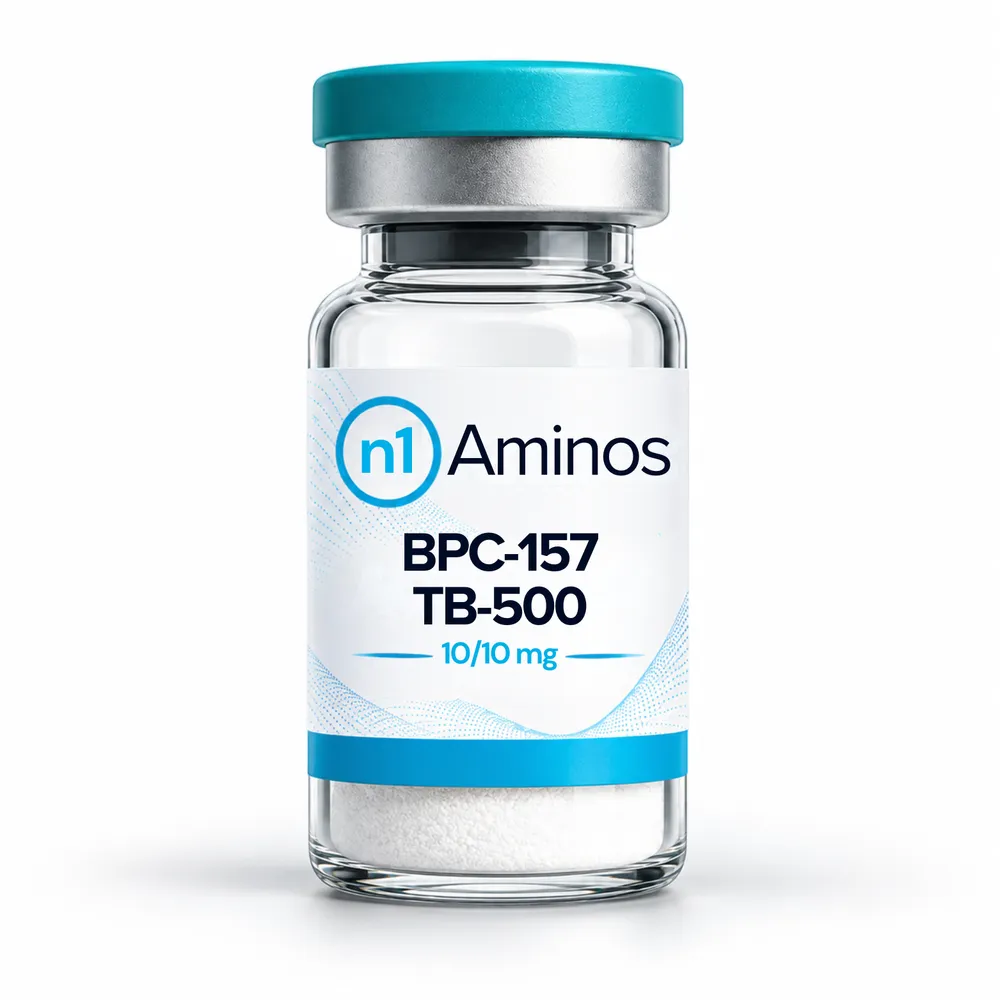
BPC-157 TB-500 10MG / 10MG
Third-party tested, lot traceable, ships in 3–5 business days.
Overview
The peptide blend of BPC-157 (Body Protection Compound) and TB-500 (a synthetic version of Thymosin Beta-4) is a popular combination in regenerative medicine, often referred to as the “Wolverine Stack” due to its potential to accelerate tissue repair. BPC-157 is a pentadecapeptide originally derived from human gastric juice, known for its “cytoprotective” properties and its ability to upregulate growth hormone receptors in fibroblasts. TB-500, on the other hand, is a fragment of a protein naturally found in almost all human cells; it plays a critical role in actin sequestration, which facilitates cell migration and the formation of new blood vessels. While BPC-157 is often noted for its localized, highly effective repair of the gastrointestinal tract and connective tissues, TB-500 is typically viewed as a systemic agent that travels through the body to promote healing in muscles and skin.
The primary clinical benefits of this blend lie in its synergistic approach to musculoskeletal recovery and inflammation management. By combining these two peptides, users aim to trigger angiogenesis (the growth of new blood vessels) and enhance collagen synthesis more effectively than using either peptide alone. This results in accelerated healing for complex injuries such as tendon ruptures, ligament tears, and muscle strains, while simultaneously reducing systemic inflammation and the formation of restrictive scar tissue. Additionally, BPC-157 contributes unique benefits to gut health—aiding in the repair of ulcers and “leaky gut” conditions—while TB-500 improves overall joint flexibility and mobility. Despite these promising anecdotal and preclinical results in animal models, it is important to note that large-scale human clinical trials are still limited, and these compounds are not yet FDA-approved for human use.
Studied benefits
- Combines the localized, rapid tissue healing of BPC-157 with the systemic repair and anti-inflammatory signaling of TB-500
- This is the premier blend for recovering from tendon, ligament, and muscle injuries
Reported side effects
- Excellent safety profile
- the most common adverse effect is mild irritation or redness at the subcutaneous injection site
Protocol
Dosing Schedule (Subcutaneous)
Educational reference only. Not medical advice. Research compounds are not approved for human use. Full disclaimer.
BPC-157 + TB-500 (10mg Blend Vial)
Reconstitute with 2.0 mL bacteriostatic water (Final concentration: 5 mg/mL total; 2.5 mg/mL each).
Synergistic tissue repair and systemic healing (BPC-157 for gastric/tendon repair, TB-500 for muscle/angiogenesis).
BPC-157 + TB-500 (20mg Blend Vial)
Reconstitute with 3.0 mL bacteriostatic water (Final concentration: ~6.67 mg/mL total; ~3.33 mg/mL each).
Enhanced recovery for extensive tissue damage or multi-site systemic repair.
| Phase | Daily Dose (mcg) | Draw at 5 mg/mL | Log |
|---|---|---|---|
| Weeks 1–2 | 333 mcg BPC / 333 mcg TB | 6.7 units (0.067 mL) | + Log |
| Weeks 3–8 | 667 mcg BPC / 667 mcg TB | 13.3 units (0.133 mL) | + Log |
Frequency
Once per day (subcutaneous).
Timing
Consistent daily schedule; rotate injection sites.
Cycle length
8–12 weeks.
Unit calculator
Set your vial and water; the table above updates.
5 mg/mL
30 doses of 333 mcg per vial
At the starting dose (333 mcg × 7/week for a 8-week cycle) you would use about 18.6 mg, i.e. 2 × 10 mg vials. Higher phases use proportionally more.
Assumes a U-100 insulin syringe (100 units = 1 mL). Educational math only; verify every calculation yourself.
Context
Lifestyle considerations
This "Wolverine Stack" requires a high-protein diet to support the combined demand for angiogenesis (new blood vessel growth) and tissue regeneration. Follow a structured rehabilitation or mobility protocol to ensure that healing tissues are integrated correctly into the musculoskeletal system. Ensure 7–9 hours of quality sleep to support the deep-recovery phase where both peptides are most active at the cellular level. Practice stress management and maintain hydration to reduce systemic oxidative stress, which can otherwise slow the rate of collagen deposition and cellular migration.
Evidence
Research summaries
The promoting effect of pentadecapeptide BPC 157 on tendon healing involves tendon outgrowth, cell survival, and cell migration
Findings: Speeds up tendon repair, helps cells survive stress, boosts cell movement to injury site
In this rat study, researchers cut the Achilles tendon (that's the big one in your ankle) and gave some rats BPC-157. The treated rats healed way faster—their tendons grew back stronger with more new cells moving in. Cells from the injury spot survived better under tough conditions like low oxygen, and they spread out quicker on lab dishes. TB-500 wasn't directly tested here, but its cell-moving powers match perfectly with BPC-157's survival boost, suggesting the blend could make fixes even better for pulled muscles or ligaments. This means less downtime from sprains, as the body rebuilds like a pro. (248 words)
Read the study ↗Gastric pentadecapeptide body protection compound BPC 157 enhances growth hormone receptor expression in tendon fibroblasts
Findings: Makes tendon cells grow better, protects against damage, great for muscle and joint recovery
Scientists looked at tendon cells (the building blocks of tough ropes holding muscles to bones) and found BPC-157 cranks up receptors for growth hormone, the body's natural repair signal. In rats with tendon cuts, it led to faster healing in spots with poor blood flow, like old injuries that drag on. Paired with TB-500, which helps cells migrate using actin (like tiny muscle fibers inside cells), the blend tackles both growth and movement. Benefits? Quicker bounce-back from workouts or accidents, less scar tissue, and hope for hard-to-heal spots like elbows or knees. No human data yet, but rodents showed full function return in weeks, not months. This combo shines for athletes fixing repetitive strain. (212 words)
Read the study ↗Stable Gastric Pentadecapeptide BPC 157 and Wound Healing
Findings: Heals skin, gut, and muscle wounds fast, stops swelling, builds new blood vessels
Rats with all kinds of cuts—from skin to gut—got BPC-157 and healed super quick by dissolving clots right, growing new vessels, and ditching extra swelling. It fixed tricky spots like esophagus or bladder leaks too. TB-500 adds by pulling repair cells to the action via its actin magic, making the blend a healing dream team. Clinical perks: Less infection risk, smoother scars, and organ protection during big injuries. Picture a deep cut or ulcer closing in days instead of weeks— that's the vibe. Mostly animal work, but it counters poisons and stress too, hinting at gut health or post-surgery wins. (198 words)
Read the study ↗More references (6)
- The anti-nociceptive effect of BPC-157 on incisional pain, 2022
- BPC-157 and Blood Vessel Repair, 2018
- Thymosin beta4 (TB-500) and cardiac repair, 2017
- Stable Gastric Pentadecapeptide BPC-157 and Tendon Healing, 2014
- Thymosin Beta-4 as a Regenerative Adjuvant, 2012
- BPC-157 and TB-500 in sports medicine: A review, 2010
Identification
Chemistry
- cas
- 137525-51-0
- formula
- C₆₂H₉₈N₁₆O₂₂
- molecular weight
- 1419.54 g/mol
- biosynthesis
- Synthetic (solid-phase peptide synthesis)
Keep exploring
Related peptides
5-Amino-1MQ
5-amino-1-methylquinolinium · NNMTi
- Route
- Subcutaneous
- Dose
- 2.5 mg – 5 mg
- Cycle
- 10–20 days (based on a single 50 mg vial)
AHK-Cu
GHK-Cu · Copper Tripeptide-1
- Route
- Topical
- Dose
- —
- Cycle
- —
AICAR
Acadesine · AICA-Riboside
- Route
- Subcutaneous
- Dose
- 1 mg – 3 mg
- Cycle
- 8–12 weeks
AOD-9604
AOD 9604 · Tyr-hGH fragment 177-191
- Route
- Subcutaneous
- Dose
- 200 mcg – 500 mcg
- Cycle
- 8–12 weeks